
- by
- 05 23, 2024
-

-
-
Loading
Loading
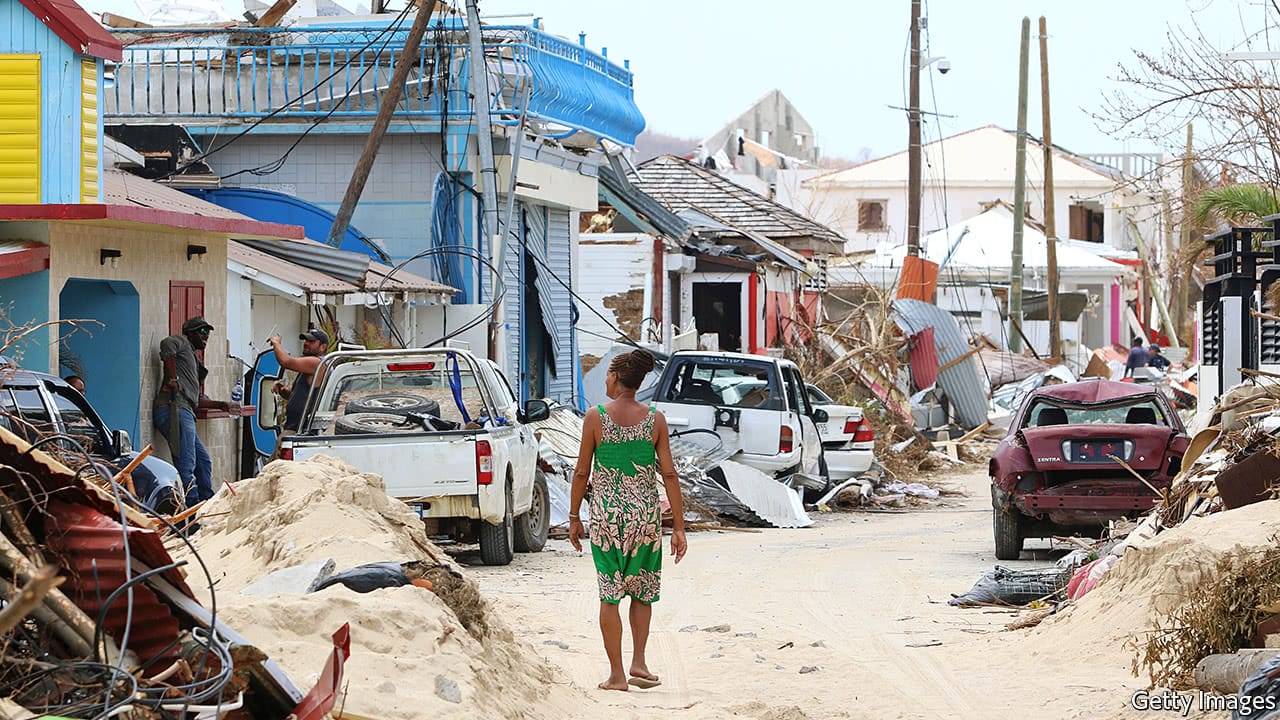
BEFORE tearing up parts of Florida, Hurricane Irma ravaged whole Caribbean islands. In doing so, it exposed the strange territorial shreds that make up the region: it destroyed Barbuda, Antigua’s poorer partner in their independent state; it wrecked most dwellings on St Martin, an island divided between France and the Netherlands; it flattened Tortola, the largest of the British Virgin Islands, and St John in the American-owned half of the same archipelago. The storm did not kill huge numbers of people—around 40 before it hit the American mainland and probably fewer than 80 all told—but the economic toll in small island territories is immense. In the United States the property damage wrought by Irma and Harvey, an earlier storm that struck Houston, is equivalent to about 1.5% of GDP. Irma’s cost to some small Caribbean islands, which promote themselves as tourist paradises, exceeds their GDP (see ).As the strongest hurricane ever to hit some of those islands, Irma is a harbinger. Warmer seas will strengthen hurricanes, and higher sea levels will make storm surges more destructive. These will smash the beach resorts from which the Caribbean largely makes its living (some are tax havens, too). A one-metre rise in sea levels, which might happen in this century, could displace more than 100,000 people in the region.


