
- by
- 05 23, 2024
-

-
-
Loading
Loading
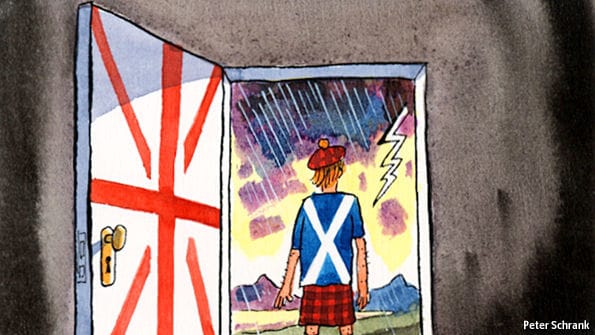
THIS was meant to be the week when a proud, sovereign nation served notice that it wanted to leave the overbearing, unrepresentative union to which it had long been shackled. And so it was—but not in quite the way that Theresa May had imagined. Britain’s prime minister had planned to trigger Article 50 of the European Union treaty, beginning the two-year process of Britain’s exit from the EU. But she was forced to delay her plans when Scotland’s first minister, Nicola Sturgeon, upstaged her by announcing that she would seek a new referendum on Scottish independence.The threat of a second constitutional earthquake in as many years is the latest reminder of Brexit’s unintended consequences (see ). The English-led move to leave a 40-year-old union with Europe is pulling at the seams of its 300-year-old union with Scotland. Mrs May’s fundamentalist interpretation of the Brexit referendum—that it requires departure from the EU’s single market and an end to free movement to and from the continent—ignores the concerns of Scots, who voted to remain, and creates an intractable problem for Northern Ireland, which shares a land border with the EU. But the lesson for Scots from Brexit is more complex than Ms Sturgeon suggests. The arguments she puts forward for remaining in the EU highlight the weaknesses in their case for independence.


