
- by
- 05 23, 2024
-

-
-
Loading
Loading
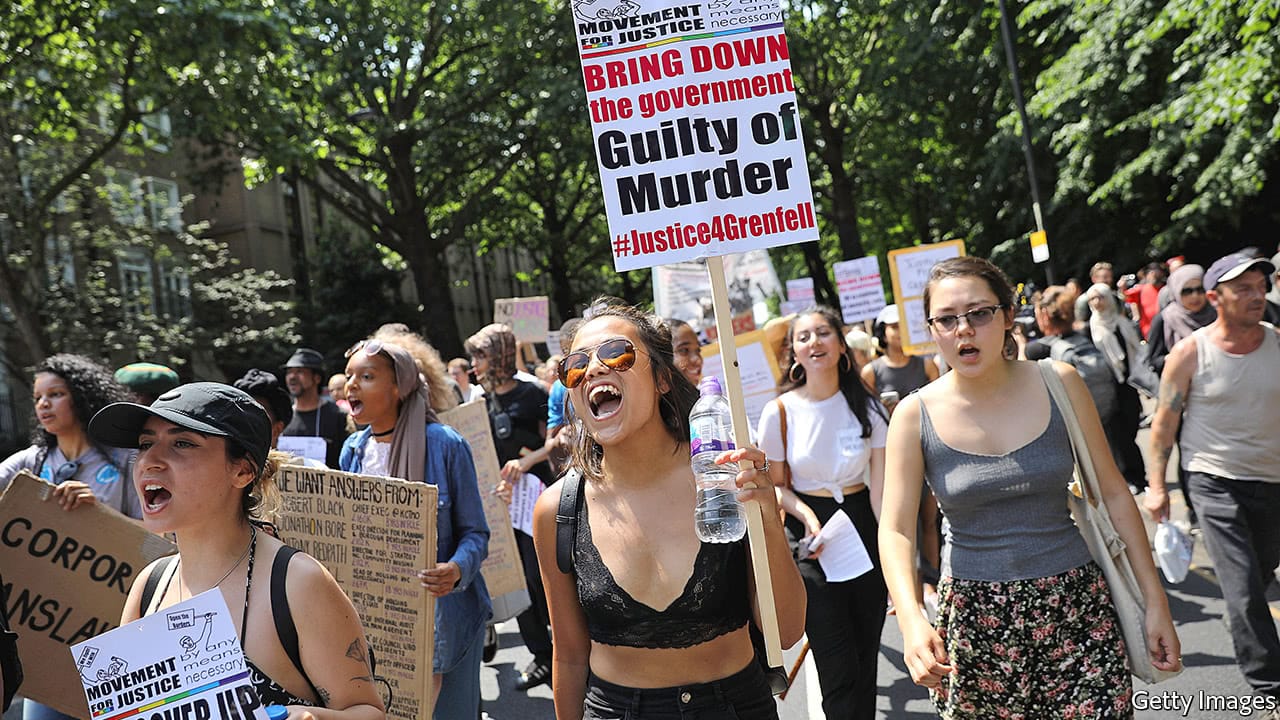
IT FEELS as if Britain has been visited by a battalion of sorrows. Deadly attacks by, and this week against, Muslims have shattered the belief that the security services can shield Britain from the terrorism afflicting the continent. A minority government has taken office under a prime minister who has no authority, ushering in chronic instability. And, as if to symbolise it all, an inferno at the Grenfell Tower in London’s richest borough claimed at least 79 lives of its poorest residents. Britons are searching for a moral that measures up to the catastrophe.Many possible morals have been overblown, sometimes to the point of exploitation. Capitalism has not failed. Britain’s tall buildings should not, as some say, be branded unfit for human habitation—but be made safer instead (see ). The fire at Grenfell Tower was not the fault of European Union regulation: other countries ban the exterior cladding that is thought to have spread it, as Britain claims to for tall buildings. This was not an indictment of private property or a justification for expropriating nearby houses, however rich their owners. It was a moment for people to take care of grieving neighbours made homeless. Nor was it an argument against deregulation. Having too many rules leads to a culture of non-compliance that is every bit as lethal as having too few. And it does not mean that public works should never be put out to tender. Run well, contracts use competition to raise standards.


