
- by
- 05 23, 2024
-

-
-
Loading
Loading
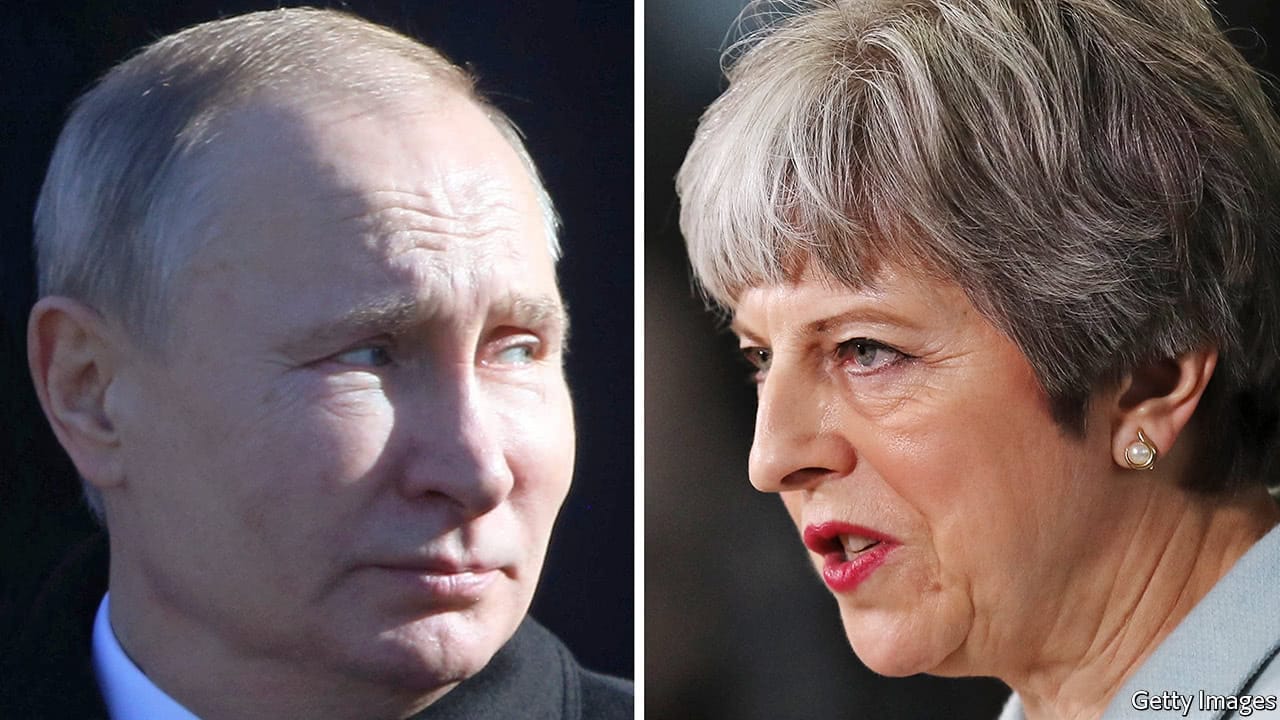
WHEN Theresa May stood before the House of Commons on March 14th to set out her response to the use of a military-grade nerve agent to poison a Russian ex-spy, she seemed to describe what was almost an act of war by a rogue regime. The attack, she said, amounted to the “unlawful use of force by the Russian state against the United Kingdom”. The attempt to kill Sergei Skripal, a former double agent—and the poisoning of his daughter and a British policeman—was “an affront to the prohibition on the use of chemical weapons”.Britain’s ultimatum for an explanation from Moscow had been contemptuously ignored. As a result, Mrs May announced a series of measures against Russia, starting with the expulsion of 23 members of the Russian embassy whom she identified as intelligence officers, the largest such clear-out in three decades (see ).


