
- by
- 05 23, 2024
-

-
-
Loading
Loading
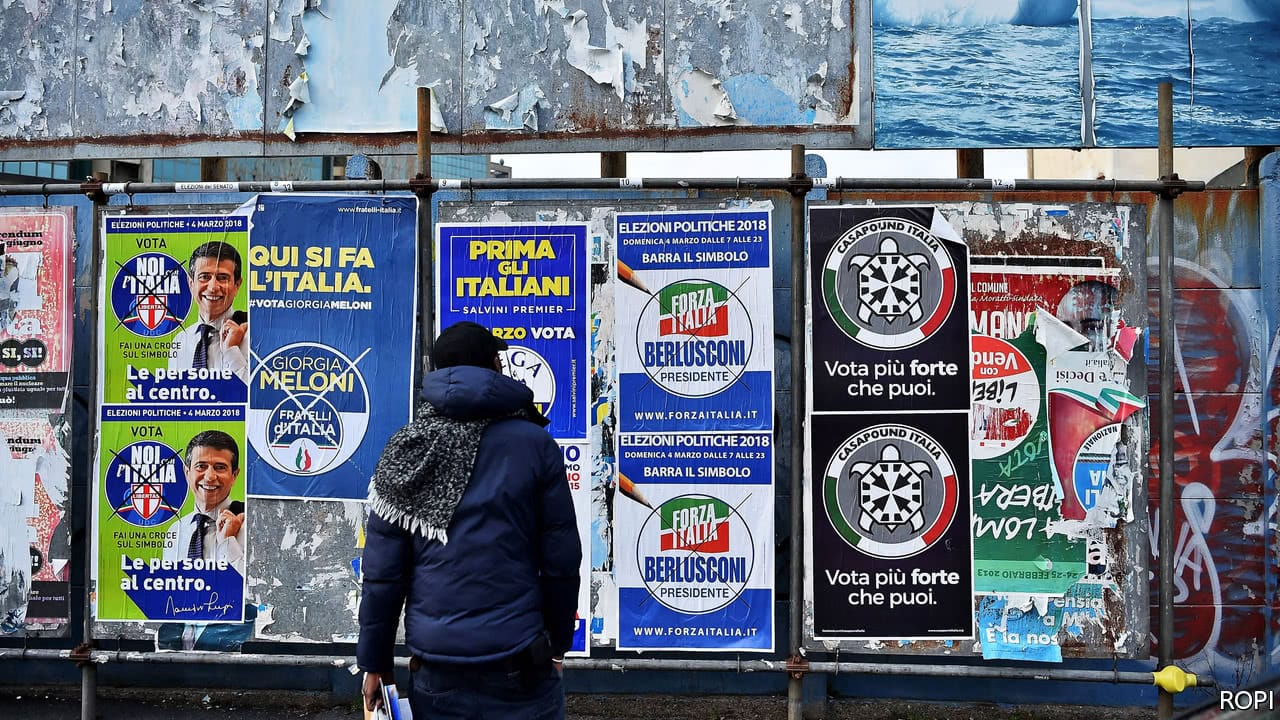
TO HEAR Italy’s politicians tell it, the country is, if not quite out of the woods, then at least emerging into an unexpected clearing, blinking gratefully. Growth has returned, exports are up, some of the weakest banks have been repaired and even the migration crisis seems to be under control, thanks to a deal with Libya’s warlords. Emboldened, the aspirants are outbidding each other to promise gifts to voters. Benefits will rise, taxes will fall and jobs will soon return.Sadly, things are not quite so rosy. The deal with Libya is precarious, to say the least. Although the economy is expanding again, its recovery is much weaker than that of the other big euro-area economies. Output growth of 1.7% a year trails the euro-zone average by a full percentage point. Unemployment is still over 10%, and far worse among young people. Banks are sitting on large portfolios of non-performing loans. At around 130% of GDP, Italy’s public-sector debt is still a huge burden, even as quantitative easing by the European Central Bank, which kept interest rates low, is coming to an end. The country is in poor shape to withstand the next downturn. Responsible, reforming government is as badly needed as ever.


