
- by
- 05 23, 2024
-

-
-
Loading
Loading
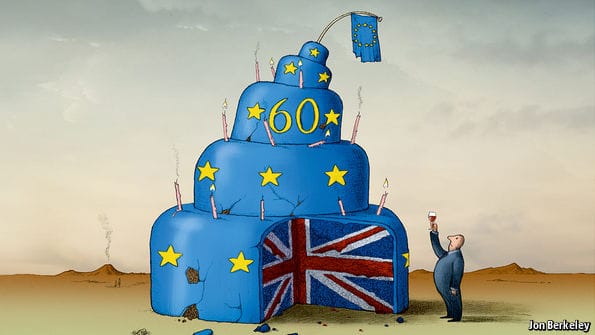
ON MARCH 25th 1957, with the shadow of the second world war still hanging over them, six European countries signed the founding treaty of a new sort of international club. The European Union, as the club came to be called, achieved success on a scale its founders could barely have imagined, not only underpinning peace on the continent but creating a single market as well as a single currency, and bringing into its fold ex-dictatorships to the south and ex-communist countries to the east, as it expanded from six members to 28. Yet even as today’s European leaders gather in Rome this weekend to celebrate the 60th anniversary, they know their project is in big trouble.The threats are both external and internal. Internally, the flaws that became glaringly evident in the euro crisis have yet to be fixed. Prolonged economic pain has contributed to a plunge in support for the EU. Populist, anti-European parties are attacking the EU’s very existence—not least in France, where Marine Le Pen is doing uncomfortably well in the presidential campaign, even if the National Front leader is unlikely to win in May. The most dramatic result of the anti-EU backlash so far is Brexit. Britain’s prime minister, Theresa May, will not be in Rome for the birthday party; on March 29th she plans to invoke Article 50 of the EU treaty to start the Brexit process. Negotiations over Britain’s departure will consume much time and energy for the next two years; losing such a big member is also a huge blow to the club’s influence and credibility.


