
- by
- 05 23, 2024
-

-
-
Loading
Loading
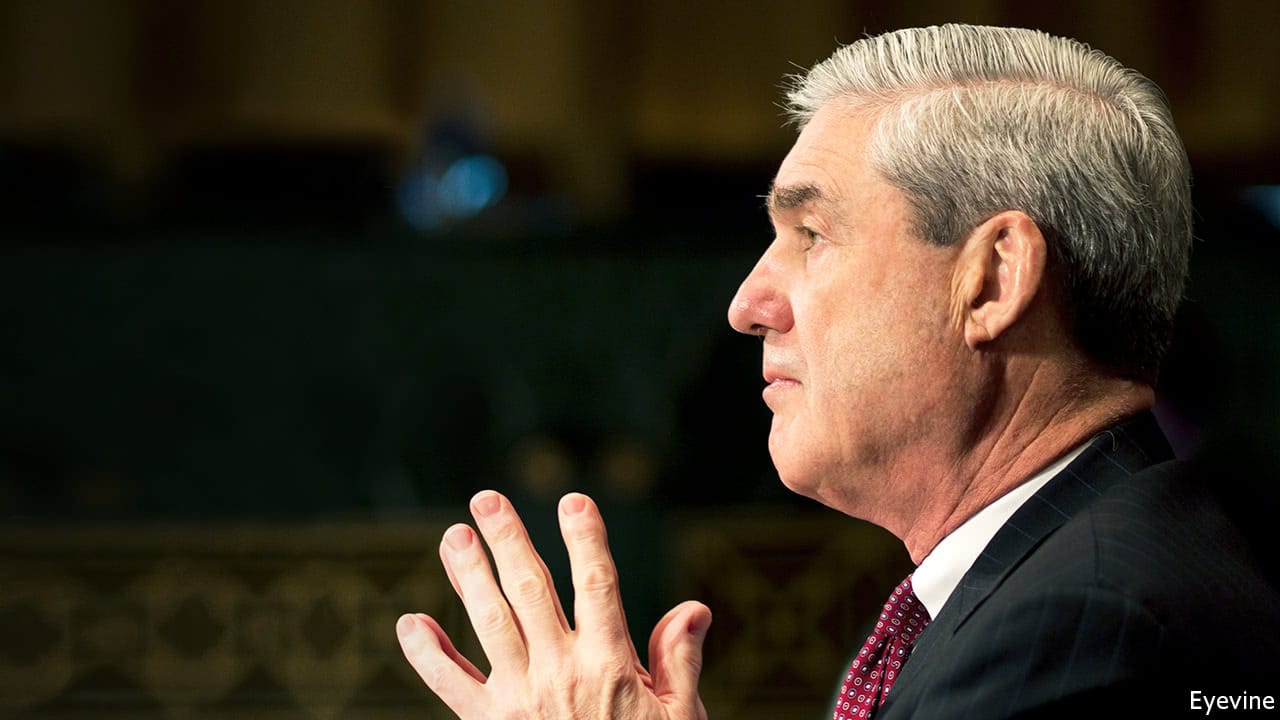
ACCORDING to NATO’s handbook, the preferred tactics in Russian information warfare can be summarised as “dismiss, distort, distract, dismay”. That is a fair description of the response in America when Robert Mueller, the special counsel, unsealed charges against Donald Trump’s former campaign manager, Paul Manafort, and two others. The president’s most enthusiastic supporters denounced Mr Mueller, saying he should be fired or, failing that, redirected to investigate Hillary Clinton instead. Meanwhile, some of the president’s opponents took Mr Mueller’s move as the prelude to impeachment. Both views are wrong and unhelpful.To think clearly about what Mr Mueller is up to, it helps to recall the terms of his appointment. The special counsel has been told by the Justice Department to investigate links or co-ordination between the Russian government and individuals associated with Mr Trump’s presidential campaign, and any other matters that arise directly from that endeavour. Unlike the three separate congressional inquiries into Russian government meddling in last year’s election, Mr Mueller is authorised to prosecute anyone who committed a federal crime (see ). The purpose of Mr Mueller’s investigation is not to take down Mr Trump. It is to make it harder for foreign governments to interfere in future elections.


